Winter: dry reed for products
Winter harvesting takes place on frozen water or frost-hardened ground. Our product development focuses primarily on winter reed: its drier material can be processed into bedding, mulch and other products.
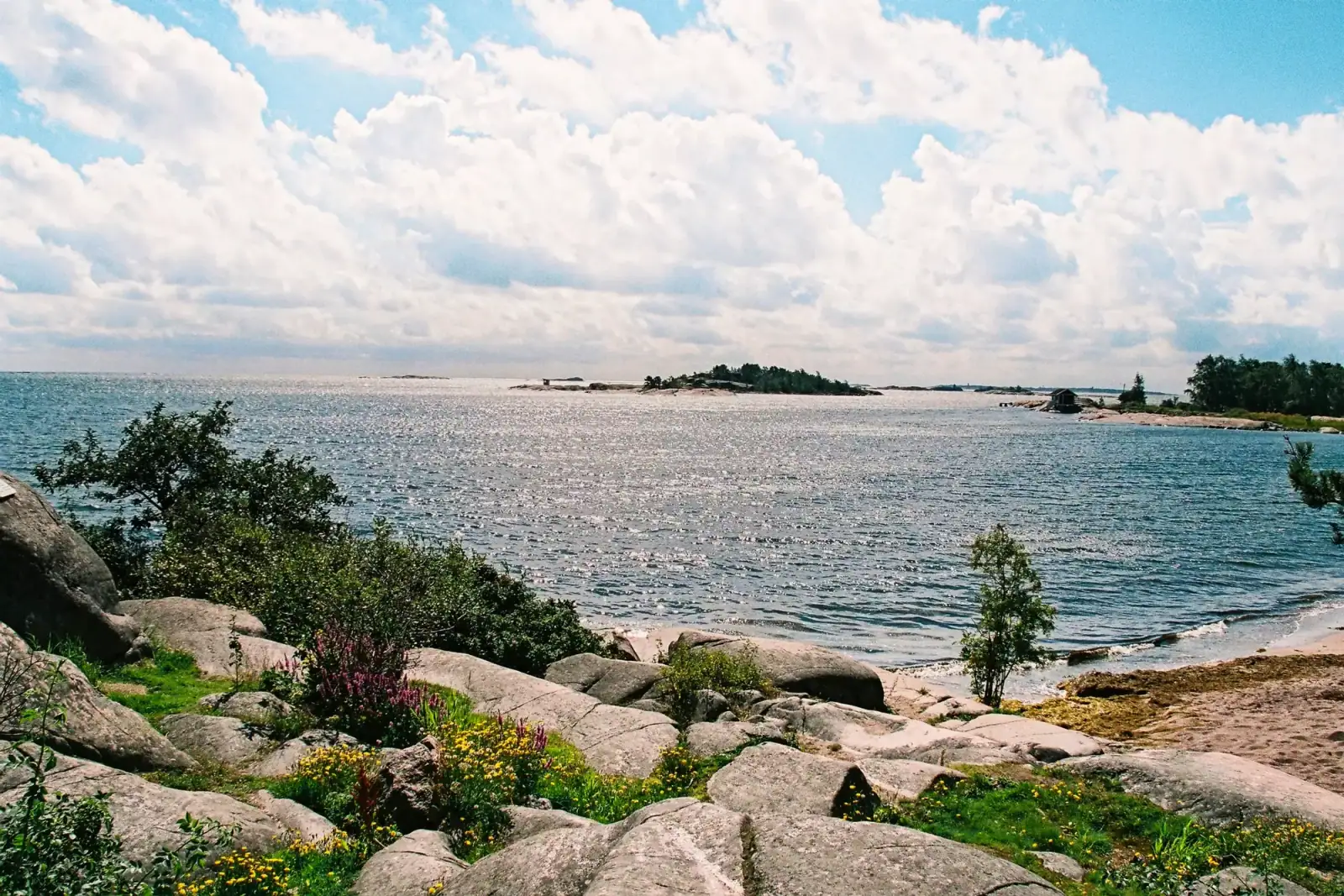 IT ALL STARTS WITH OUR WATERS.
 Common reed grows all around us. We see an opportunity to put it to work — for people, for places, and for the waters it comes from.
Reed is a renewable raw material, harvested here in Finland and made into useful everyday products.
Harvesting reed can remove nutrients from waterways. Thoughtful timing and local conditions guide the work.
We connect harvesting, processing and product development, finding more ways to make use of this versatile plant.
Reed is part of Finland’s shorelines and wetlands. Our starting point is to find useful applications for harvested material, while recognising that reed beds also have a role in their surroundings. Harvesting decisions depend on the site.
The current range brings reed into loose playground surfaces, artificial-turf infill, garden mulch, animal bedding and compost or dry toilets. Choosing the right product starts with the intended use and the guidance for that product.
Reed beds offer shelter and habitat, absorb nutrients and trap sediment. Planning the harvest means considering both the ecology of the area and how the shoreline is used.
Dense growth and reed debris can obstruct water flow. Collecting cut material can also remove the nutrients it contains, instead of leaving them to return to the water as the material decomposes.
Our aim is to connect that management work with demand for reed. Harvesting, processing and useful products form the basis for an operation that can continue over the long term.
Winter harvesting takes place on frozen water or frost-hardened ground. Our product development focuses primarily on winter reed: its drier material can be processed into bedding, mulch and other products.
Summer cutting is used to control reed growth around beaches, boating routes and other areas in use. Summer reed contains more nutrients and can be used for soil improvement and growing media. Collecting the cut material is part of the work.
Site inspection, permissions and logistics planning come before the harvest. The area and the intended use of the reed inform the work.
We carry out summer and winter harvesting and collect the reed for use, rather than leaving the cut material in the water.
We manage transport, storage and processing, connecting the harvested raw material with the needs of each product.
Chaff, pellets and bundles give the harvest different uses, from landscaping and animal care to construction materials.
Alongside the product range, further uses for reed are being explored. One example is the use of higher-carbon winter reed as a raw material for biochar. These research directions sit alongside the products already in use.
Explore reed products